

Complete Guide: Hiring Remote Arduino Developers vs Freelance Arduino Developers
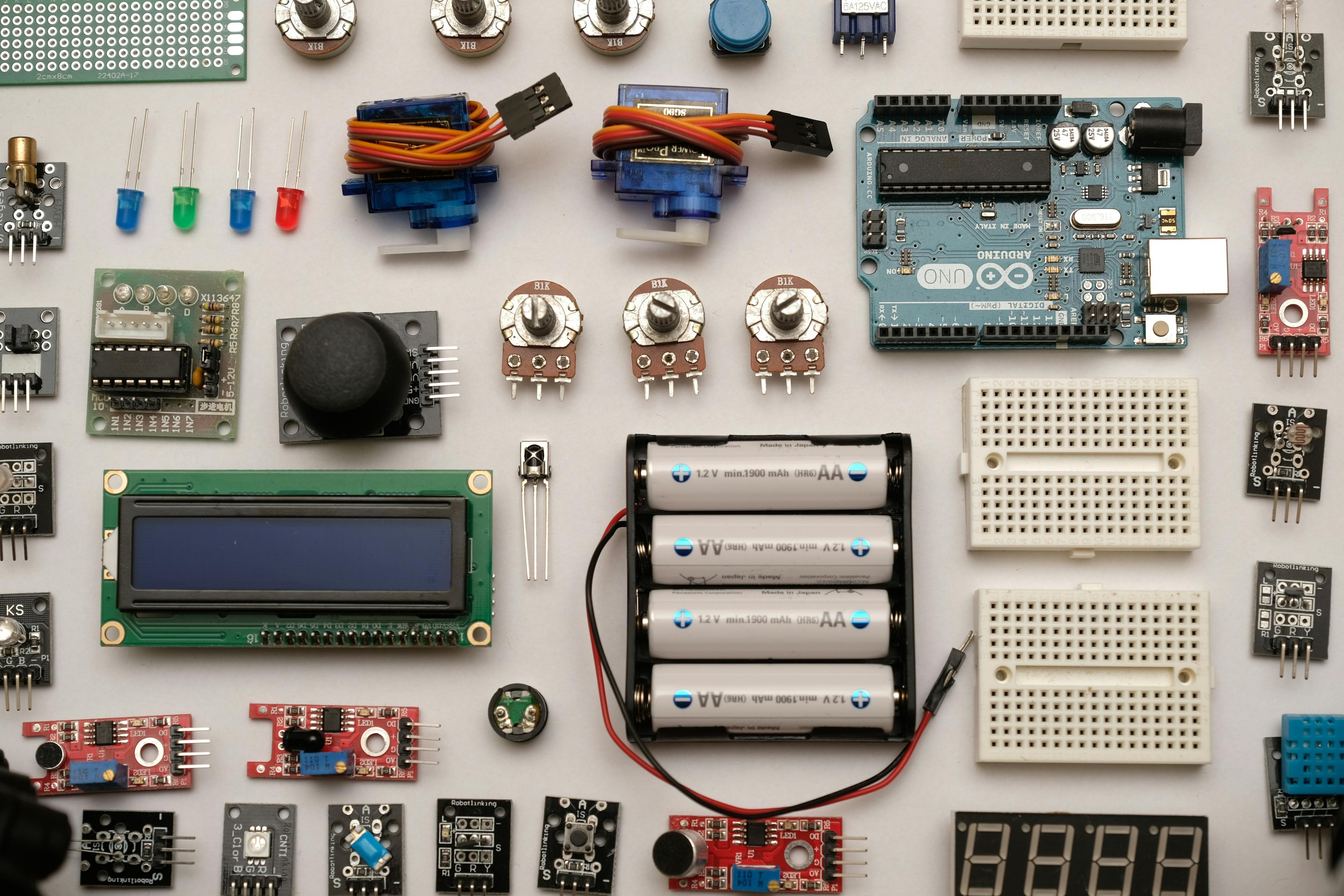
Two paths to Arduino expertise
You need Arduino expertise for your project. Maybe you've hit a technical wall, need to move from prototype to production, or want to add features beyond your skills. You have two main options: hire a freelance Arduino developer or engage a remote Arduino development company.
Both can work, but they're different. The choice affects cost, quality, timeline, and how much you'll need to manage the project yourself. This guide breaks down the real differences, with actual numbers and practical advice to help you decide.
Understanding freelance Arduino developers
Freelance Arduino developers are individual contractors working independently. They range from hobbyists doing Arduino projects on the side to professional engineers who freelance full-time. You hire them directly, usually through platforms like Upwork, Freelancer.com, or Fiverr, or through personal networks.
Typical rates: According to Upwork data, the median hourly rate for Arduino programmers is around $30 per hour, with typical rates spanning $25 to $39 per hour. This is a global average and includes relatively junior freelancers. For experienced freelancers, especially those with hardware engineering backgrounds, rates can be higher—$50 to $80 per hour is common. In Western countries or for very specialized skills, rates can reach $100+ per hour, though those are outliers for typical Arduino projects.
Regional differences matter. Freelancers from Eastern Europe (Poland, Ukraine) or Asia (India, Pakistan) often charge $20 to $40 per hour. Those in Western Europe or the US typically charge $50 to $100 per hour for experienced work.
Where to find them: Upwork, Freelancer.com, and Fiverr are the main platforms. Toptal offers more vetted, higher-end talent but at premium prices. Arduino forums have sections for gigs and collaborations. LinkedIn and local networks can also connect you with freelance consultants.
Pros of hiring freelancers:
- Lower cost: Without corporate overhead, freelancers can charge less. An agency might bill $150 to $200 per hour for the same work a freelancer does at $75 to $100 per hour—roughly 50% cost savings.
- Flexibility: Freelancers can adapt quickly to schedule changes. Need a quick fix? A freelancer might do it the next day, whereas an agency might require change orders and scheduling.
- Direct communication: You're talking to the person doing the work. This avoids miscommunications that happen when messages pass through layers. You can build a close working rapport.
- Specialized talent: If you find a freelancer who exactly matches your niche—say, someone who's built custom Arduino data loggers for agriculture, and that's your project—they bring relevant experience and can hit the ground running.
- No long-term commitment: You can hire them for a one-off task or short project, which is convenient for prototyping or troubleshooting.
Cons of hiring freelancers:
- Reliability and availability: A single freelancer can fall sick, have personal emergencies, or take on another job, leaving you stranded. They might work multiple gigs at once, so your project might not always be top priority unless you negotiate dedicated time.
- Limited skill set: One person can only know so much. If your project needs advanced PCB design, coding, and backend cloud work, it's rare to find one person equally skilled at all. Work quality might vary by area.
- Scalability: If your project scope grows, a single person becomes a bottleneck. Turnaround time might be slow for large tasks. They can't work in parallel like a team can.
- Management overhead: When using freelancers, you often need to manage them closely—break down tasks, set milestones, review work. Not all clients have the technical ability or time to do that. If you don't manage well, the project can go off-track.
- Tools and infrastructure: A development company might have professional tools (licenses for expensive software, lab equipment), whereas a freelancer might only have personal tools. For Arduino, this is usually fine, but if you need something special like certification testing, a freelancer might not have access.
- Risk of churn: Some freelancers, if they find a full-time job or a larger contract, might suddenly become unavailable, leaving the project in limbo.
Understanding remote Arduino development companies
Remote Arduino development companies are engineering firms or agencies that specialize in Arduino and embedded systems. They might brand themselves as "IoT development companies" or "embedded systems consultancies" rather than specifically Arduino, but they have Arduino expertise as part of their services. They could be small teams of engineers or larger companies.
Services provided:
- End-to-end development: They can take requirements and deliver a turnkey solution. For an Arduino project, that might include hardware design (schematics/PCB), firmware coding, and even companion software (like a simple app or cloud integration for IoT products).
- Team roles: They typically have embedded software engineers, hardware engineers, and possibly UI/UX or app developers if they do full IoT solutions. This means they can handle hardware, firmware, cloud, and mobile under one roof.
- Project management: They assign a project manager to coordinate and ensure the project is delivered on time and scope. This reduces your management burden.
- Support and maintenance: Companies often offer support contracts or will be around for future enhancements. A freelancer might move on, but a company likely will be there.
- Processes: Companies typically have formal development processes—planning, milestones, regular reports, QA testing phases. This can mean fewer bugs and a more reliable final product.
Typical pricing: According to industry data, small firms charge $90 to $160 per hour, mid-sized firms $120 to $250 per hour, and big firms $250 to $350 per hour. For Arduino-scale projects, you're likely dealing with small to mid-size firms, so maybe $100 to $150 per hour typical in US/Europe. Offshore agencies (e.g., in India, Ukraine) might charge less—maybe $40 to $80 per hour.
For fixed-price projects, agencies might charge roughly 1.5 to 2 times the cost of a solo freelancer. A forum example mentioned a job might be $50,000 via agency versus $30,000 as a freelancer. The difference is partly overhead, profit margins, and presumably including more services like project management and QA.
Pros of hiring development companies:
- Multi-disciplinary expertise: One-stop shop. Your project might need an enclosure design or a mobile app—an agency might have partners or in-house talent for that, beyond just Arduino coding.
- Team scalability: If you need to accelerate, an agency can put more developers on the task to meet a deadline (if you're willing to pay). A freelancer is one person; an agency could allocate 2–3 people temporarily.
- Structured management: They'll likely have project management so you don't have to chase the developer daily. They might use tools (Jira, Trello) and provide you visibility.
- Quality assurance: Agencies often have internal QA. Code reviews by peers, hardware review by senior engineers, testing on multiple devices. A freelancer might test only on their one board; an agency might test on a batch with standardized procedures.
- Accountability and continuity: A company has a reputation to maintain and formal contracts. They are less likely to ghost you. They can offer warranty on work or support periods. There's typically an ability to scale down or up—after development, you might keep them on a small retainer for maintenance.
- Insight and consulting: With their experience, a good development company will not just do tasks but also advise. They may suggest a better microcontroller or different approach if Arduino isn't ideal, because they care about end success.
Cons of hiring development companies:
- Higher cost: Not just hourly, but also sometimes they push for larger scope (they might upsell features or insist on more documentation, which adds cost, though arguably beneficial). For a given small task, an agency route will simply cost more because of overhead.
- Minimum engagement size: Some agencies won't take very small projects because it's not worth their overhead. They might have a minimum fee or timeline. If you just want a 1-week quick project, many agencies would decline or charge a premium.
- Less direct control: When working with a team, you as the client might not directly assign tasks to each developer; you speak to PM, and they allocate work. If you like to be very hands-on, this can be an adjustment.
- Potential communication gaps: If the agency is larger or not specialized in Arduino, you might occasionally find the salesperson or PM isn't deeply technical, causing misunderstandings. Ideally, you'd talk to a technical lead.
- Commitment: Engaging a firm usually involves a formal contract, possibly upfront deposits. It's a bigger commitment than hiring a freelancer off Upwork for a few hours with fairly easy termination.
Side-by-side comparison
Cost: For a 200-hour project, a $30/hour freelancer = $6,000 versus a $150/hour agency = $30,000. That's a huge difference. However, agencies provide broader scope (project management, QA, etc.) as part of that cost. Also, with a freelancer, you might spend more of your own time managing, which is a cost. The communication overhead is a hidden cost with freelancers because you essentially do more management.
Project management: Freelancers require client-managed tasks, milestones, and coordination. Companies have dedicated PM, structured processes, regular updates. Communication overhead differs—freelancers can offer more direct communication, while companies have structured updates.
Expertise range: Freelancers are limited to an individual's skills. Maybe strong in coding but not PCB design, or vice versa. Companies have multi-skill teams covering firmware, hardware, app dev, etc. under one roof.
Reliability: Freelancers are dependent on one person's availability. If they fall sick or take another job, your project stalls. Companies have redundancy—if one member is unavailable, the company can replace to keep the project on track.
Quality control: Freelancer quality varies by individual. No formal QA unless they do so. You must do more testing/validation. Companies have formal QA/testing processes, peer review likely. Higher chance of catching issues early.
Support and maintenance: Freelancers might offer ongoing support, but if you come back after a year needing updates, they may or may not be available. Companies often offer maintenance contracts or at least are likely to accept follow-on work. Documentation: agencies usually deliver documentation as part of project; some freelancers do as well, but it varies.
When to choose each option
Choose freelance Arduino developers when:
- Small, well-defined projects: You have a clear scope and limited budget. A quick prototype, troubleshooting, or incremental feature addition.
- Limited budget: Cost is a primary concern, and you can manage the project yourself.
- Quick turnaround needed: You need something done fast, and a freelancer can start immediately.
- You can manage the project: You have the technical ability or time to break down tasks, set milestones, and review work.
- Single skill needed: You just need firmware coding, not hardware design or cloud integration.
Choose Arduino development companies when:
- Complex, multi-disciplinary projects: You need complete solutions—hardware design, firmware, cloud integration, mobile apps.
- Commercial product development: You're building something to sell, and you need reliability, QA, and proper documentation.
- Regulatory compliance needed: You need certifications, and the company can handle compliance testing and documentation.
- Long-term support required: You envision needing updates/upgrades in the future, and continuity matters.
- You want less management burden: You prefer structured project management and regular updates rather than managing day-to-day tasks.
Hybrid approach: Start with a freelancer for a proof-of-concept, then engage a company for productization. Or hire a freelancer and later bring them on full-time if the project grows.
Hiring process and best practices
Hiring freelance Arduino developers:
- Write a clear job post: Include specific technical requirements (e.g., "experience with Arduino Mega and Modbus communication" or "must have prior projects interfacing Arduino with BLE and mobile apps").
- Review portfolios: Look at past Arduino or embedded projects. Check Upwork/Freelancer reviews. Ask for examples similar to yours.
- Conduct a technical interview: Ask how they'd approach your project or about past similar work. Gauge if they truly understand (e.g., "how would you debounce a noisy sensor in code").
- Start with a small paid test: First milestone: get sensor X working and send data log. If it goes well, continue; if not, find someone else early.
- Use milestone payments: Don't pay 100% upfront. Use platform escrow or milestone payments to ensure they deliver each part before releasing full payment.
- Establish communication expectations: Daily or weekly updates? Via email, Slack? Clarify time zone and hours of availability.
Hiring Arduino development companies:
- Research companies: Look for companies with Arduino/IoT portfolio. Check Clutch.co or other directories. Search regionally if cost matters (e.g., "Arduino development company Poland").
- Request case studies and references: If they built something similar, ask if you can speak to that client or at least get details of how it went.
- Ask about team composition: Who would be working on the project? Request to speak to the technical lead or a developer to assess competence.
- Clarify deliverables and milestones: Design phase deliverable, prototype deliverable, testing phase, final delivery, etc. What constitutes acceptance at each stage?
- Discuss IP ownership: Ensure contract states you own the designs/code produced.
- Set up communication schedule: Weekly sprint review if agile, or milestone meetings.
- Payment terms: Many agencies want some upfront (20–30%) and then milestone payments. That's normal. Just ensure it aligns with output—never pay 50% upfront for no work.
Key questions to ask both:
- How do you handle debugging hardware remotely?
- What happens if requirements change mid-project?
- Can you sign an NDA and who owns the IP/code at project end?
- What's your experience with similar projects?
- How do you handle project management and communication?
Red flags to avoid
Freelancer red flags:
- Unrealistic timelines or prices (way lower than others might mean inexperience)
- Poor communication in initial chats
- No relevant portfolio or only basic blinking LED projects
- Unwilling to sign contracts/NDAs
- Overpromising ("yes to everything" without acknowledging challenges)
- Lack of questions (a good developer will ask questions to clarify requirements)
Company red flags:
- No relevant portfolio
- Non-technical sales only (can't answer deeper questions)
- Pushing solutions that don't fit (e.g., insisting not to use Arduino when your requirement is specifically Arduino—unless they have valid reasoning)
- Unclear team structure (who will actually do the work?)
- Unwilling to sign contracts or NDAs
Geographic considerations
Eastern Europe (Poland, Ukraine): Known for excellent embedded engineers at lower rates. A Polish embedded dev might be $40/hour freelance, and an agency maybe $60–80/hour. Quality is often high, and communication is good as English proficiency is common. Minimal time zone gap for EU clients.
Western Europe/US: Highest rates, but sometimes culturally closer for Western clients. If budget allows, can yield very smooth collaboration. US-based consultant might be $100/hour, but you get immediate communication in your timezone.
Asia (India, Pakistan, China): Can have even lower rates ($15–30/hour freelance), but there is often a greater range of quality. Communication and time zone differences require careful management. If going with an Indian agency, they might be well-versed in Western clients, but ensure their understanding and speak to technical leads.
Latin America: Another region rising in remote dev popularity (close time zone to US). Rates might be mid-level ($30–50/hour freelancers). Possibly a good mix of cost saving and easier communication due to time zones.
Quality can be found everywhere. The key is finding the right fit for your project, budget, and communication needs.
The bottom line
Both options can succeed if managed well. The choice comes down to your project scope, budget, timeline, and how much management you want to handle yourself.
For simple or short-term projects with limited budget, a freelancer is usually the right choice. For large, complex projects or end-to-end product development, a development company is often better. They can handle the complete solution from hardware design to firmware to software, whereas a single freelancer might only cover firmware.
The most important thing is clearly defining your project scope, checking the developer or team's Arduino expertise (not all embedded devs are Arduino-savvy), and establishing good communication from the start. If you're unsure, you could even consult with a firm to scope the project and then decide to either hire them or implement with freelancers.
If you need help deciding, consider that some companies offer the best of both worlds—the personalized approach of a dedicated team with the breadth of a company. The key is finding the right fit for your specific needs.
At Blues Brackets we solve real business challenges with the latest and proven technology.