Embedded firmware development for Bluetooth LE devices
We build production-grade firmware for Nordic nRF52, nRF53, and nRF54 — and the companion mobile app that talks to it. One team responsible for the full stack, from GATT profile to App Store.
Who we work with
Who are our firmware development services for?
We work with hardware teams, startups, and product companies that need reliable embedded firmware and the software stack around it. Does one of these fit your situation?
You have chosen your Nordic chip and need a firmware team that knows the nRF Connect SDK, Zephyr RTOS, and BLE stack inside out.
Connection drops, unexpected resets, or a codebase no one dares to touch. We diagnose the root cause and bring it back under control.
You want one partner responsible for both sides of the BLE link — so the GATT profile, protocol design, and app logic are consistent from day one.
Upgrading from an nRF52 series to nRF5340 or nRF54L15 brings new toolchains and architectural changes. We help you plan and execute the migration.
Shipping firmware updates to devices already in the field requires a secure bootloader, DFU protocol, and a mobile app that can manage the process reliably.
Sounds like your project?
Tell us about your hardware and what the firmware needs to do. We will help you scope the work and find the right approach.
Book a free consultationOur expertise
Why choose us as your firmware development company?
We specialise in Bluetooth LE firmware on Nordic hardware. We also build the mobile app. Most embedded shops stop at the device — we cover the complete product.
Nordic nRF52, nRF53, nRF54 specialists
We work daily with the nRF Connect SDK, Zephyr RTOS, and the Nordic BLE stack. nRF52832, nRF52840, nRF5340, nRF54L15, nRF54H20 — we know their differences, peripheral sets, and the gotchas that waste weeks of bring-up time.
Deep Bluetooth LE expertise
Custom GATT profiles, connection parameter tuning, power optimization, OTA DFU, BLE Mesh, and Auracast (LE Audio). We design the BLE protocol layer so it works reliably in the real world, not just on the bench.
Full stack: firmware and mobile app
We design the GATT profile and then implement it in both the firmware and the iOS/Android app. No handover risk, no finger-pointing between teams — one partner accountable for the complete BLE product.
Production-grade quality
We write firmware intended to ship in volume and run unsupervised in the field. That means secure bootloaders, watchdog handling, systematic power profiling, and thorough testing with real hardware.
European team, EU data standards
We are based in Poland and understand the regulatory landscape for products sold in the EU. GDPR-compliant cloud, English and Polish communication, and alignment with CE and Bluetooth SIG requirements.
Services
Custom firmware development services
From architecture and GATT design to production testing and OTA updates. Our embedded firmware development service covers every stage of the firmware lifecycle.
Firmware architecture and consulting
We review your hardware design, define the firmware architecture, choose the right RTOS configuration, and design the BLE GATT profile before a line of code is written — reducing risk from the start.
Custom firmware development
We write production firmware for Nordic nRF52, nRF53, and nRF54 using the nRF Connect SDK and Zephyr RTOS. Peripheral drivers, application logic, BLE stack configuration, and power management.
Bluetooth LE integration
Custom GATT profiles, connection and advertising configuration, bonding and pairing, notification and indication handling, and BLE Mesh or Auracast for more complex topologies.
OTA firmware updates (DFU)
We implement the Nordic Secure Bootloader and nRF DFU protocol so you can push firmware updates to devices in the field via the companion mobile app — securely and without physical access.
Companion mobile app development
We build the iOS and Android app (Flutter) that pairs with your device. One team owns the GATT protocol on both ends, so integration works reliably from day one.
Hardware bring-up and testing
We bring up new PCB revisions, write hardware abstraction layers for custom peripherals, and build automated test rigs that verify firmware behaviour on real hardware.
Power optimization
Battery life is a product feature. We profile current draw, tune advertising intervals, implement sleep modes, and measure the result on real hardware — not just in simulation.
Firmware maintenance and support
After launch we handle ongoing firmware maintenance, compatibility updates for new nRF SDK and Zephyr releases, bug fixes, and iterative feature development as your product evolves.
Not sure what you need?
Send us your hardware specs and a brief description of the firmware requirements. We will come back with an honest assessment and a scoping proposal.
Book a free consultationOur process
How a firmware project runs
Clear stages, defined deliverables, and hardware in the loop from day one. Here is how we go from first contact to production-ready firmware.
Free online meeting
A 30-minute call with a firmware engineer. You describe the hardware and requirements; we give you an honest first assessment and indicative estimate.
Architecture workshop
After a 2-hour online session you receive a written report covering firmware architecture, GATT profile design, risk areas, and a detailed project estimate.
Hardware bring-up
We verify the hardware, bring up the basic firmware skeleton, confirm BLE communication, and document the peripheral interfaces before full development begins.
Contract signing
We define milestones, commit to delivery dates, and agree on how progress is communicated throughout the project.
Stage-by-stage firmware development
Peripheral drivers, BLE stack, application logic, OTA DFU, and power optimization — delivered in stages with real hardware testing and regular progress reviews.
Mobile app integration
The companion iOS and Android app is built alongside or after the firmware, using the same GATT profile design so both sides work correctly together.
Production testing and store release
We support manufacturing test procedures, DFU validation, and App Store / Google Play release of the companion app.
Handover and ongoing support
You receive the full source code and documentation, or we continue as your firmware maintenance partner for the long term.
About us
A firmware development company that also ships the app
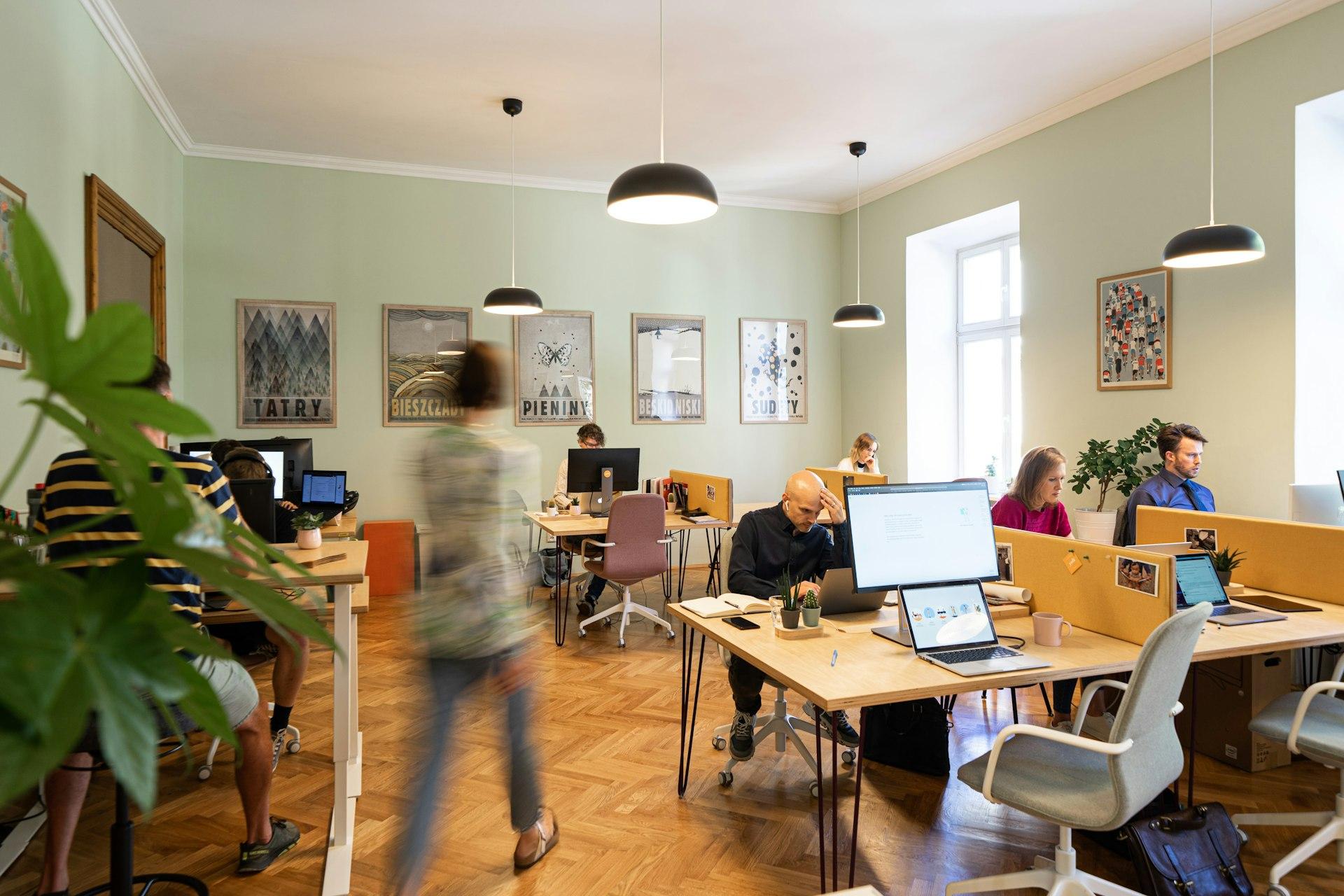
We are a small, senior team from Poland with hands-on experience in embedded firmware, Bluetooth LE, and mobile app development.
Michał and Tomasz lead firmware and mobile development, Kuba handles backend and infrastructure, and Mateusz designs the UX that makes hardware products intuitive to use.
- No account managers or outsourcing layers. The person on the call is the person writing the firmware.
- Based in Poland, we understand CE requirements, GDPR compliance, and what it takes to launch a hardware product in the EU.
- From nRF chip selection and firmware to mobile app and backend — one partner for the complete BLE product reduces integration risk significantly.